Posts tagged overwhelming
3 Fantastic Reasons to Declutter Now Instead of One Day

Is your life overflowing with stuff? Even if your belongings have ‘homes’ and you know where to find them, does the sheer volume feel overwhelming? Drawing on more than thirty years of working with clients and my own life experience, I’ve seen how the accumulation of stuff happens. It’s a slow (and sometimes not-so-slow) creep of collecting. 

One day, you look around and wonder:

  • Where did all this stuff come from?

  • Do I still need these things?

  • Are they taking up too much space, management time, and mental energy?

  • Is all this stuff necessary for the life I’m living now?

  • What will happen to my belongings when I’m gone?

  • What would life feel like with less?

  • What would it feel like to align what I own with the life I’m living?

There are many ways to think about clutter and the physical items that accompany your life. Let’s look at three reasons why decluttering sooner rather than later could benefit you. If even one idea resonates with you, it could be the cue and motivation you need to begin the decluttering process.


3 Compelling Reasons to Declutter Now Instead of Waiting

1. 300,000!

A frequently cited statistic in the organizing industry and media is the number of things we accumulate. Estimates suggest that the average American household may contain hundreds of thousands of items. The number often cited is 300,000. That’s a lot of stuff!

Whether that’s your number is a separate question. I don’t know what our household number is. Out of curiosity, I counted some objects in a few areas, and I was surprised by what I found:

  • 778 – Number of items in the bedroom clothing closet, including clothes, hangers, shoes, shoe boxes, and some accessories. We have additional clothes and shoes in the dressers and other areas.

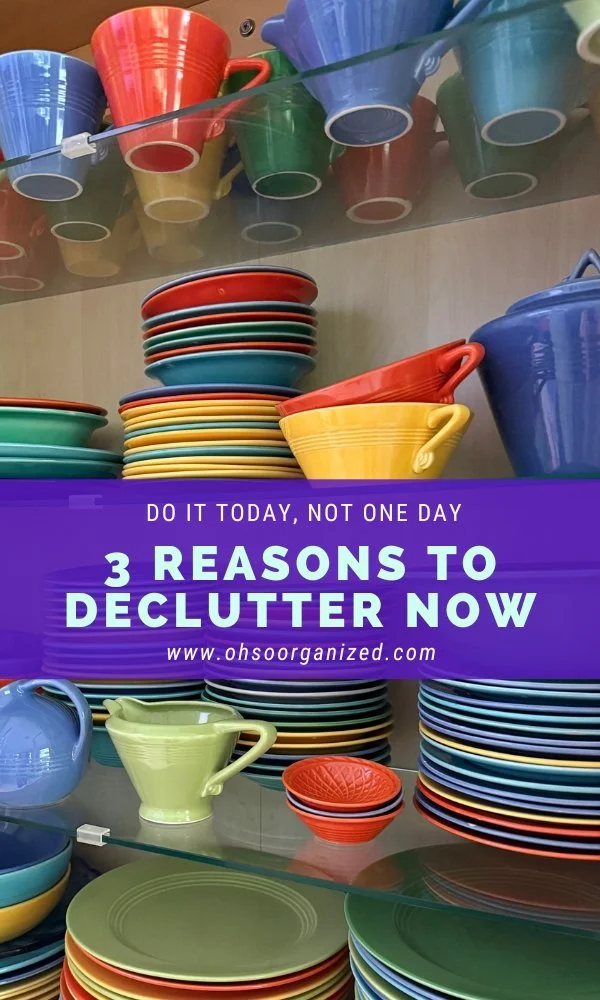
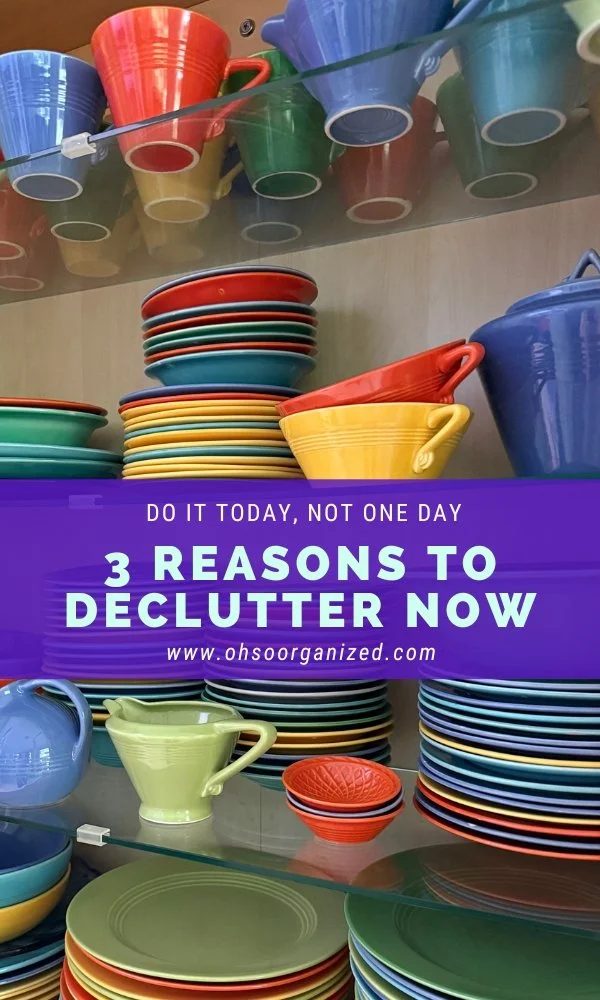
  • 289 – Number of items in the dining room china cabinet. We have more dishes in the kitchen.

  • 49 – Number of items in the desk pen cup. I have many more writing instruments in other areas and in the supply cabinet.

The 1,116 items counted so far represent only a tiny portion of what we have in our household. I'm not sure whether we actually own 300,000 items. The idea is to recognize what you have and align it with what you want, need, and use.

By focusing on specific areas and doing a quick count, I spotted several things that could go. For instance, I don’t like all the pens that have landed in the pen cup—time to declutter. Even in the china cabinet, there are several dishes I don’t want that could go. While I regularly go through my clothing closet, more could be edited out.

Being aware of how much you have will help you declutter the things that no longer matter or are not useful to you.


2. Yikes!

Clutter can cause stress and affect your ability to focus. My clients have described how clutter affects them as,

  • “I have so much clutter I can’t even think.”

  • “I don’t want to feel overwhelmed by my stuff.”

  • “The clutter is distracting, and I can’t focus.”

  • “Clutter makes me feel agitated and angry.”

  • “I don’t want to feel clutter-related stress and anxiety.”

Research backs up the experience my clients describe. UCLA Center on Everyday Lives of Families (CELF) conducted research and discovered that “cluttered home environments were associated with elevated cortisol levels – especially among women who described their homes as chaotic or stressful.” Cortisol is the hormone produced as part of the body’s stress response.

Neuroscience research on cognitive overload and attention, including Princeton University’s work, shows that visual clutter, or “competing visual stimuli,” reduces the brain’s ability to focus and process information efficiently.

Knowing how clutter can affect your stress, attention, and functioning makes a compelling case for decluttering sooner rather than later.

Clutter can cause stress and affect your ability to focus.
— Linda Samuels, CPO-CD®, CVOP™

3. For love.

Recently, I came across an Instagram video featuring Alice D’Antoni Phillips, a psychologist-turned-chef. She discussed the emotional struggle of letting go of sentimental items while downsizing. Alice also described letting go as “an act of care.” She didn’t want to burden her loved ones with decisions about her stuff after she’s gone.

Then she said a beautiful phrase that stuck with me. It’s so gentle, compassionate, and loving. Alice said, “Easing the path of life for the people you love.” In that, she acknowledged that we’re all going to be gone at some point. We are born. We live. We die. That’s the reality.

The other part was about making it easier for the people you love by handling your stuff before you go. Making decisions and decluttering now are expressions of love.

It’s never too soon to start decluttering. Your loved ones will thank you.


Why Declutter Now?

There are countless reasons to declutter now, without delay. Some might be:

  • Your clutter is causing undue stress.

  • You have more things than you use, need, or want.

  • You want to make decisions about your belongings so your loved ones don’t have to after you’re gone.

  • You want to downsize and prepare to move.

  • You’re fed up with all the stuff.

  • You want greater clarity of mind and in your space.

What are your compelling reasons to declutter? What is motivating you? Which ideas resonate most? I’d love to hear your thoughts. I invite you to join the conversation.


How Can I Help?

Do you feel overwhelmed or disorganized? Is the clutter in your life causing stress and keeping you from living the life you want? I’m here to help! You don’t have to do this alone. Virtual organizing is an extraordinary path forward – Local feel with a global reach.

Let’s connect! I’m easy to reach.

Decluttering, getting organized, and living with more ease are possible, especially with support.


 
 
Goldilocks Inspires Useful Clues for How to Really Let Go

Do you remember the story of Goldilocks and the Three Bears? One of the main themes is Goldilocks’ search for what felt “just right.” One chair was too big, and another too small. She rejected both. However, when she found the one that fit, she knew it was the one for her and used it. The chair was right-sized and “just right” for her.

At the core of the Goldilocks philosophy is finding the sweet spot, the optimal place where things feel balanced, comfortable, and supportive. Who knew Goldilocks could help with letting go?

Are you struggling to let go of things, ideas, habits, or commitments? If so, a Goldilocks approach could help. Her decision tree went like this:

“This bed is too hard.”

“This bed is too soft.”

“This bed is just right.”

What will “just right” look and feel like for you?


Why is Letting Go Overwhelming?

There can be a lot to sort through, which can make letting go feel overwhelming. Clutter can accumulate from:

  • years of acquiring

  • gifts and inherited items from others

  • postponed decisions

  • emotional attachments

  • unclear or nonexistent organizational systems

  • being overscheduled

  • unclear boundaries

  • not following through on closure loops

Time is part of the equation, too. You need time to make decisions and to align what you own with who you are and what you need now. This can be tricky if you feel stuck in the past or are holding onto things for an aspirational future or self.

However, when you start making decisions based on who you are now and your current needs, it brings greater clarity as you let go.


Are You Sacrificing the Present?

Many years ago, I attended an ICD class on consumerism, minimalism, and experimentalism, presented by my friend and colleague, Lynne Johnson. She shared a quote about letting go.

How much of your present are you willing to sacrifice in order to save remembrances of your past to ponder in your future?
— Anonymous

The question aligns with the Goldilocks philosophy of the three-point decision tree, but from a time-based perspective. Consider what you are holding onto in relation to the:

  • Past - Are you willing to hold on to things from your past that keep you stuck and no longer serve you? Can you release them and move on?

  • Present - Are you willing to let those things take up physical space and mental energy, distracting you from the present? Can you let go and be more aligned with the present?

  • Future - Are you holding onto things with a glimmer of hope that you will revisit, use, or need them someday? Can you say goodbye to them in service of an unencumbered future?


What DOES Letting GO Look Like?

When you release what you no longer need, you invite more ease, better life alignment, joy, and growth. Even releasing one thing makes room for what’s most important, essential, and valued by you.

Letting go can look like this:

  • Donate the never-used pots and pans to make the ones used regularly more accessible.

  • Release rarely-used purses to make room for the ones you do use.

  • Recycle the papers that ‘time took care of’ so you can focus on what’s current.

  • Skip the to-do list to enjoy a beautiful spring weekend day.

What does letting go look like for you?


The Goldilocks of Letting Go

What happens when you begin to align your life so it feels “just right?” Will you release what no longer belongs, brings you joy, or is useful? Will letting go bring you closer to living your best life now? When you release what's blocking your energy, space, and thoughts, you create room for calm, growth, and happiness.

Which ideas resonate with you most? I’d love to hear your thoughts. I invite you to join the conversation.


How Can I Help?

Do you feel overwhelmed or disorganized? Do you want to let go of the unnecessary but feel stuck or unsure where to start? I’m here to help! You don’t have to do this alone. Virtual organizing is an extraordinary path forward – Local feel with a global reach.

Let’s connect! I’m easy to reach.

Letting go and getting organized are possible, especially with support.

 
 
Here Are 5 Most Interesting and Best Fresh Start Discoveries – v53

Enjoy the latest release (v53) of the “What’s Interesting?” series, which features my most recent finds that inspire, spark curiosity, and connect to organizing and life balance. These unique, fresh start discoveries reflect this month’s blog theme.

You are an engaged, vibrant, and generous group. I am deeply grateful for your ongoing presence, positive energy, and contributions to this community.

I look forward to your participation and further contributions to the collection I curated.

What do you find interesting?


What’s Interesting? – 5 Best Fresh Start Discoveries

1. Interesting Read – Fresh Start Goals

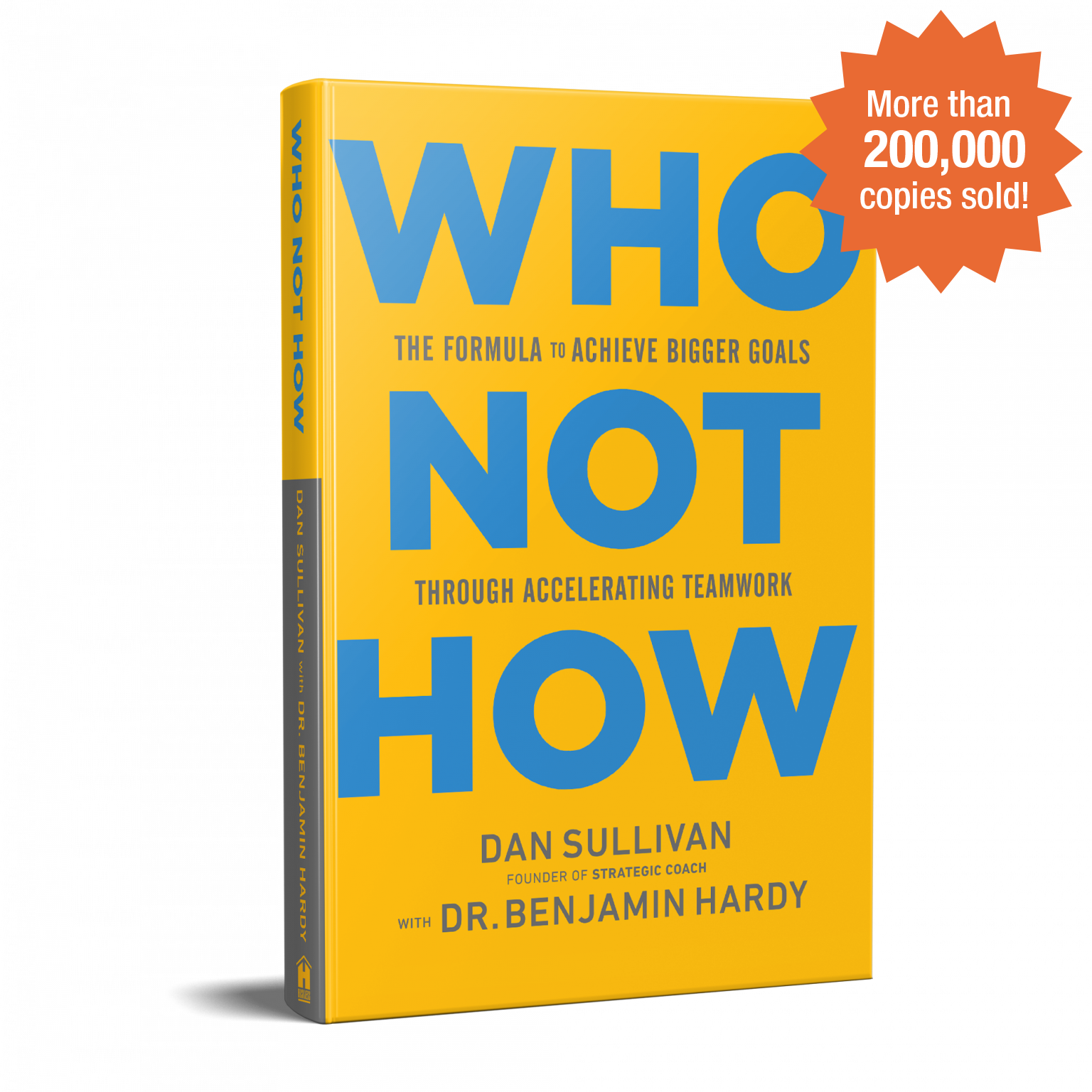
Bigger isn’t always better. Yet if you want to strive for an audacious goal this year, Dan Sullivan, coach and author of Who Not How – The Formula to Achieve Bigger Goals Through Accelerating Teamwork, has a way to get there.

This philosophy hinges on changing the questions you ask. Stop asking, “How can I do this?” Forget working in isolation and doing everything yourself. Instead, Sullivan teaches you to ask, “Who can do this for me?”

He advocates focusing on the “whos in your life that give you the perspectives, resources, and ability to go beyond what you could do alone.” Replace “How can I accomplish this?” with “Who can help me achieve this?”

If you’re feeling frustrated and stuck, it could be the ideal time to build your ‘who’ team.


2. Interesting Experience – Fresh Start ‘Party’

Do you have any “boring tasks” you’re procrastinating on? If so, you are not alone. Thanks to one of my clients, I learned about a Business Insider article that describes a new trend offering a fun solution to this challenge.

Instead of staying stuck and alone while trying to get things done, consider hosting an “admin night” party, as Business Insider editor Tess Martinelli did. She invited her friends over to work on their to-do lists or anything that was causing mind clutter, while also having time to socialize.

She kept things casual and as “low effort” as possible. While there were few rules, Marinelli set several parameters to help make the evening flow better, including:

  • Dress comfortably.

  • Bring your own snacks.
    Provide a beverage (optional).

  • Give some structure, such as working for 30 minutes and socializing or resting for 10 minutes. Repeat that cycle two or three times.

  • After each “round,” talk about what you accomplished.


3. Interesting Article – Fresh Start Decluttering

One of the top ten New Year’s resolutions is to be more organized. An essential part of getting organized is decluttering. This involves letting go of:

  • things that have overstayed their welcome

  • no longer support your current reality, or

  • don’t want or need.

In The Washington Post article “How to reduce visual clutter for a calmer, more functional home,” the case is made for how taxing visual clutter can be on the brain. My clients often describe their clutter (physical or visual) as paralyzing or overwhelming their thoughts and actions.

Corey Pence from The Container Store defines visual clutter as an “overwhelming or excessive amount of visual elements in a space that make it difficult to focus on important information or executing tasks.” Clutter can also make it hard to feel calm and relaxed. Imagine a bedroom with clothing piled everywhere, or a living room with books, toys, and dishes strewn about.

The article suggests many ways to eliminate visual clutter, such as:

  • choosing furniture that encloses objects, such as a nightstand with a drawer instead of an open shelf

  • editing routinely

  • designating a home for objects

  • using coordinated bins on open shelves

  • carefully curating decorative objects, with an emphasis on having fewer

For a great fresh start, declutter until you find that sweet spot for the level of visual clutter your brain can handle.


4. Interesting Product – Fresh Start Planning

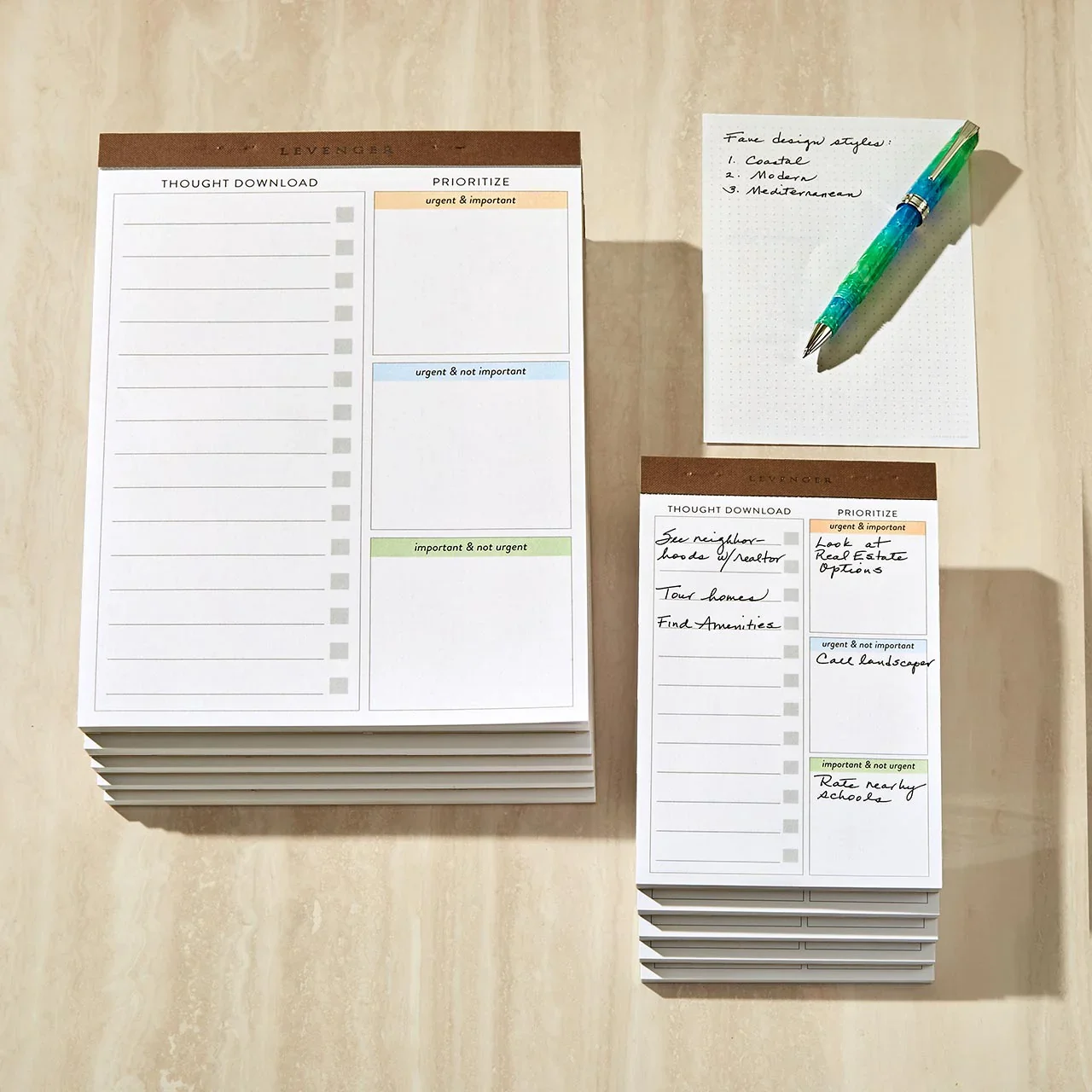
My go-to source for paper pads is Levenger. Their designs are streamlined, and the paper is smooth and easy to write on. If you’re looking for a new way to capture and prioritize your thoughts, check out Levenger’s Think and Plan Priority Manager Pad.

The pad comes in two sizes with two columns and four sections. The left column is great for brainstorming and list-making. It includes:

  • A ruled checklist

The right column is for prioritizing tasks using the Eisenhower method. It has three boxed sections for tasks:

  • Urgent and important

  • Urgent and not important

  • Important and not urgent

Download your brain, sort your to-dos, and give yourself an organized way to focus on your new beginning.


For a great fresh start, declutter until you find that sweet spot for the level of visual clutter your brain can handle.
— Linda Samuels, CPO-CD®, CVOP™


5. Interesting Thought – Fresh Start Magic

There’s something magical about fresh starts and new beginnings. You might feel hopeful, curious, excited, eager, joyful, empowered, or inspired. However, I’ve heard from many people recently that they’re having a very different experience. With the fresh start of the new year, they’re feeling anxious, apprehensive, pressured, disoriented, overwhelmed, or stuck.

Believe me, I get it. I’ve felt all of these ways at different points. On the one hand, I embrace and love a clean slate. It’s an opportunity for a reset and reimagining. Some years, like this past year, I just wasn’t ready to do ‘new.’ Instead, I was in the thick of finishing projects from the year, which overlapped with the time I typically review and plan.

Wherever you are right now, consider these possibilities:

  • If you’re ready, let the wonder of a new year help you move forward.

  • If you’re not ready, be gentle with yourself and ease the pressure to make big new plans for now.

Stay open to activating a fresh start (and its magical powers) at any time: a new day, month, or season.


The Fresh Start Advantage

There’s still time to make this first month of the new year work for you. Lean into the energy and newness of this season. Use the clean slate to your advantage.

Which of these discoveries resonates most with you? Which would you like to add? I’d love to hear your thoughts and invite you to join the conversation.


How Can I Help?

Do you feel overwhelmed, stuck, or disorganized? I’m here to help. Virtual organizing is an extraordinary path forward – Local feel with a global reach.

Let’s talk. I’m easy to reach.

Getting organized is possible, especially with a fresh start and compassionate support.


5 Simple Practices to Joyfully Reduce Stress and Restore Balance Now

It’s the holiday season. Lights twinkle, gifts get wrapped, and plans are in flux. You’re doing your best to keep up with your daily commitments and the extra effort it takes to navigate this season of celebration, gatherings, and giving. It can be a lot, both wonderful and overwhelming.

On one hand, you have extra time to be with your loved ones and take a break from your normal routines. However, there can also be pressure to say “yes” to all invitations, buy gifts beyond your budget, or overindulge in holiday treats. There are more delicious cookies around than usual. Oh, no!

While the holiday season can be joyful, it can also be stressful, making you feel anxious and out of balance. The good news is that it doesn’t have to be that way.

Recently, I discovered some wonderful grounding practices in “Are You Made at Me? – How to Stop Focusing on What Others Think and Start Living for You” by Meg Josephson, LSCW. These strategies help break the cycle of chronic stress, which negatively affects the mind and body.


Stress: “A Flirty Little Loop”

What is the stress cycle all about? Josephson explains, “The body naturally responds to stress – whether it’s real, remembered, or perceived– with tension, and this response keeps stress and tension going in a flirty little loop.” She describes the four-step cycle:

  • Stressful Happening – This could be internal or external, such as “an anxious thought spiral or someone doing something to make you feel unsafe, whether or not you actually are.”

  • Body Reacts – Your body responds by tensing up.

  • Message Perceived – Tensed muscles send signals to the body indicating that “Something bad is happening! This is stressful.”

  • Cycle Continues – “The tense muscles cue more anxious thoughts, more muscular tension, and more panic.” These reactions perpetuate the stress-and-tension loop.

Josephson says, “When the mind is tense, so is the body. When the body is tense, so is the mind. By first noticing that we’re tensing up, feeling stressed, we can immediately insert a pause into this automatic process and begin to soften our bodies. Being aware of the stress is what allows us to start to break the cycle.”

I will highlight my top five favorite grounding practices from the 14 that Josephson shared. These will help you reduce stress, feel more balanced, present, and calm.

When the mind is tense, so is the body. When the body is tense, so is the mind.
— Meg Josephson, LCSW

5 Simple Grounding Practices to Reduce Stress and Nurture Balance

These techniques can be used at any time during your day when you feel stressed. It all starts with awareness—paying attention to body signals like tense muscles.

1. Increasing Exhale

Elongate your exhale by doing a few cycles where you exhale longer than you inhale. For example, inhale for a count of 4 and exhale for a count of 6. This technique stimulates the vagus nerve, which immediately activates the parasympathetic nervous system, or “rest and digest” mode.


2. Humming

Keep your mouth closed, relax your jaw, and breathe in and out through your nose while making a sound with your vocal cords. The gentle buzzing sound creates vibrations that stimulate your vagus nerve. Singing or chanting can also work because the larynx (the voice box) is connected to the vagus nerve.


3. Sensing with 5, 4, 3, 2, 1

Use your senses to ground yourself by noticing the environment around you right now. Observe what’s nearby, and “Name five things you can see, four things you can feel, three things you can hear, two things you can smell, and one thing you can taste.”


4. Using Your Hands

Research shows that “effective touch” is a stress reliever. This can include self-touch. Notice where you feel tension. Place your hand or palm on that area and breathe deeply. For example, if you’re feeling tension in your chest, put your hand there and breathe several times. This practice is calming and reduces stress.


5. Dancing

This practice feels especially fun during the holiday season. Of course, you can do it anytime. Dancing helps integrate movement and breath. It connects you to your body and takes you out of your head. Play your favorite tune and dance away.


How Do You Manage Stress and Invite More Balance?

It’s the season for joy and delight. But when you’re feeling stressed and off balance, accessing that joy can be difficult. Which of these five grounding practices resonates most with you? What else helps you feel grounded, calm, and balanced?

I’d love to hear your thoughts. I invite you to join the conversation.


How Can I Help?

Do you feel overwhelmed, disorganized, stressed, or out of balance? Would you like to make progress? I’m here to help! Virtual organizing is an extraordinary path forward – Local feel with a global reach.

Let’s connect! I’m easy to reach.

Getting organized is possible, especially with support.