Posts tagged thoughts
How to Meet Change with More Compassion and Ease

When you think of compassion and ease, what sensations do you feel in your body? What images come to mind? What stories or messages do your thoughts reveal?

Now, think about change. Are you experiencing sensations, images, and thoughts that feel quite different from those associated with compassion and ease?

No one has the same experience, and yours will likely differ from mine. For me, thoughts of compassion and ease bring calm, care, and gentleness. My breath feels steady and slow. My mind feels clear. I feel more grounded, present, and better able to navigate in the moment.

When I think about change, my initial reaction is to brace. I can feel my shoulders tense, my jaw clench, and a funny sensation in my stomach. Not all change feels that way. Sometimes, positive anticipation and excitement are present. But rarely with change is my first thought or feeling calm or ease-filled.

What becomes possible when you can meet change with compassion and ease?


Meet Change More Gently
Last week, I wrote about the Tiny Shifts Experience I’ve been participating in, led by Dr. Elisha Goldstein. In one of his prompts, he guided us to “Allow a little more ease” throughout the day.

Before starting the Tiny Shifts program, I had been considering “ease” as my guiding principle, my North Star for 2026. When Elisha encouraged us to “Allow a little more ease,” it confirmed what I was already thinking.

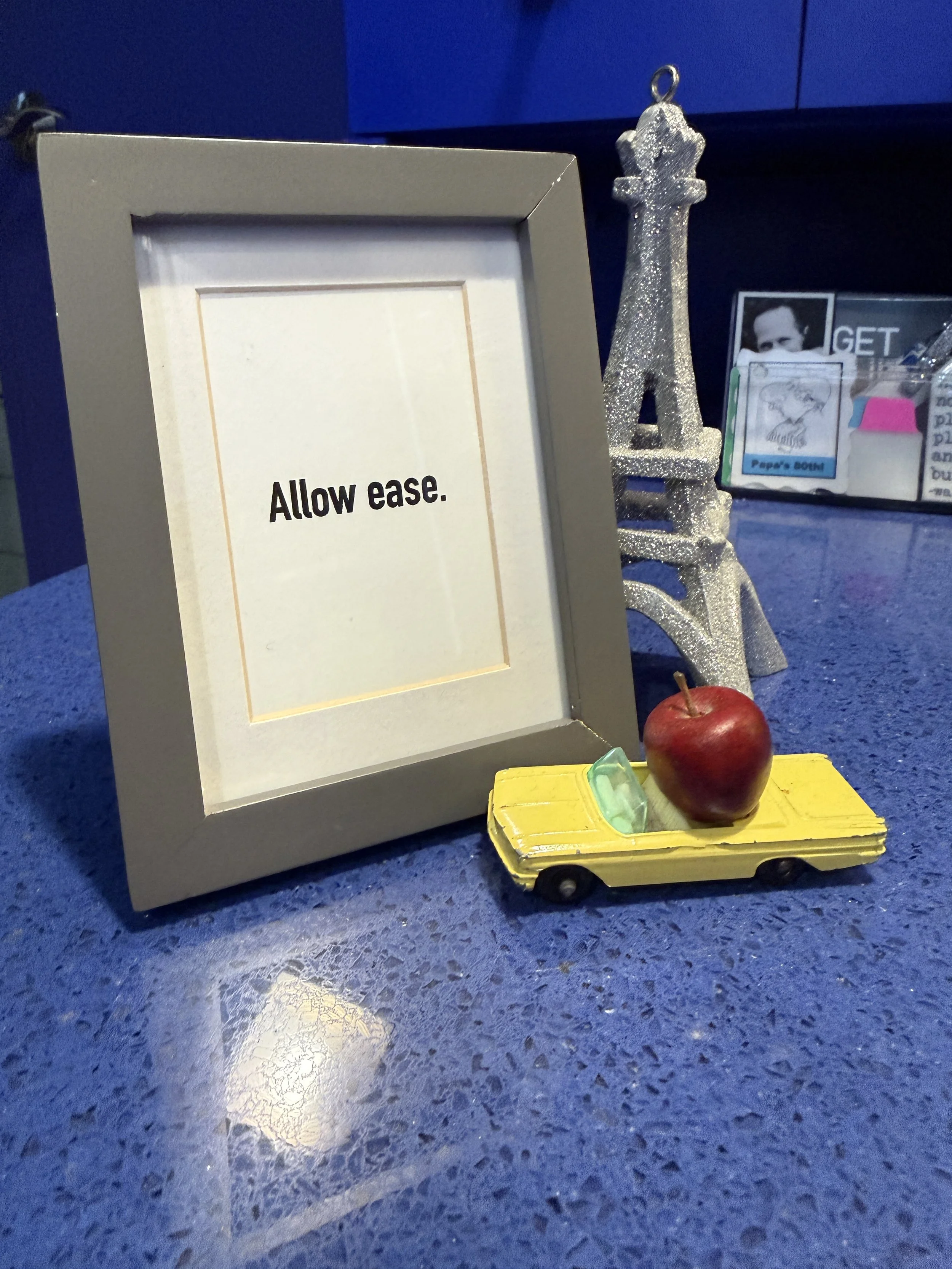
This week, I tweaked the message. My focus for 2026 will be “Allow ease.” I will meet each day, including the challenges, joys, tasks, commitments, and changes I seek, and those thrust upon me, with more compassion and ease.


Engage in Strategies That Encourage Ease

When I notice I’m getting stressed, I will lean on these two strategies.

Strategy 1: Embody Ease with the Breath

This one is so simple. I’ve already used it half a dozen times recently, and it’s incredibly effective. It takes less than a minute.

To Embody Ease:

  • Pause what you’re doing.

  • Gently close your eyes or shift your gaze downwards.

  • Thinking silently, pair these two words while you breathe.

  • Inhale > Allow.

  • Exhale > Ease.

  • Repeat the sequence one or more times until your nervous system calms.

Strategy 2: Ask One Simple Question

You can ask this question on its own, before, or after using the breathing strategy. Listen to what arises and then focus on making a small shift.

Ask this:

Where can I allow more ease right now?

The query will help you identify where your tension or stress lies. How can you change your experience in the moment and lean into more ease? Is there a physical place in your body you can soften? Is there an unhelpful thought loop that needs to be released or noticed? Where is ease possible for you right now?

Where can I allow more ease right now?
— Linda Samuels, CPO-CD®, CVOP™


Can You Shift How You Approach Change?

Change can be exciting or stressful. By integrating strategies that foster compassion and ease, you can move forward with greater grounding and calm. What is your relationship to change? How could creating more ease alter your relationship with change? Which ideas resonate with you?

I’d love to hear your thoughts. I invite you to join the conversation.


How Can I Help?

Do you feel overwhelmed, disorganized, or stressed? Do you want to embrace change this year, yet feel stuck? I’m here to help! Virtual organizing is an extraordinary path forward – Local feel with a global reach.

Let’s connect! I’m easy to reach.

Embracing change and getting organized are possible, especially with support.


Here Are 5 Most Interesting and Best Fresh Start Discoveries – v53

Enjoy the latest release (v53) of the “What’s Interesting?” series, which features my most recent finds that inspire, spark curiosity, and connect to organizing and life balance. These unique, fresh start discoveries reflect this month’s blog theme.

You are an engaged, vibrant, and generous group. I am deeply grateful for your ongoing presence, positive energy, and contributions to this community.

I look forward to your participation and further contributions to the collection I curated.

What do you find interesting?


What’s Interesting? – 5 Best Fresh Start Discoveries

1. Interesting Read – Fresh Start Goals

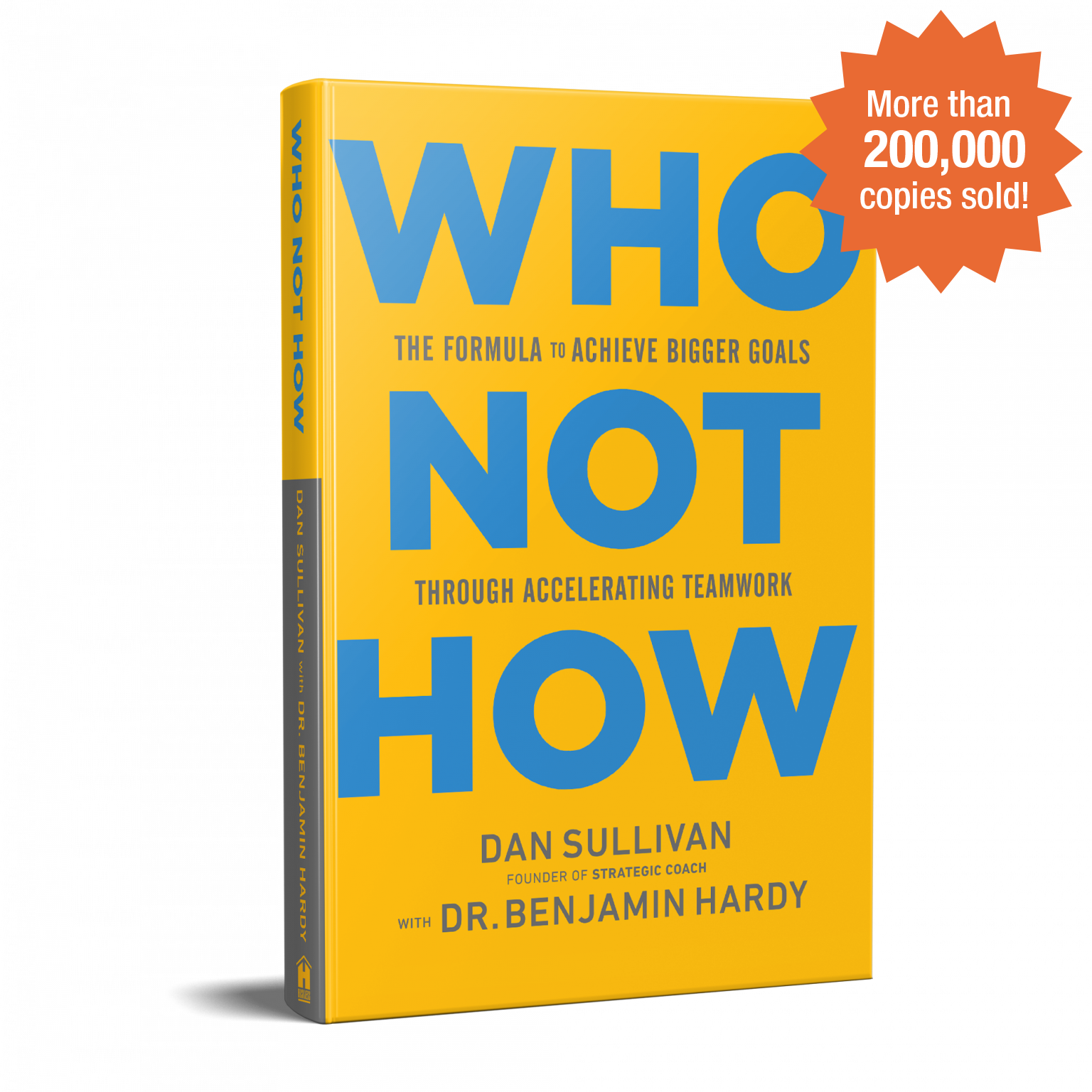
Bigger isn’t always better. Yet if you want to strive for an audacious goal this year, Dan Sullivan, coach and author of Who Not How – The Formula to Achieve Bigger Goals Through Accelerating Teamwork, has a way to get there.

This philosophy hinges on changing the questions you ask. Stop asking, “How can I do this?” Forget working in isolation and doing everything yourself. Instead, Sullivan teaches you to ask, “Who can do this for me?”

He advocates focusing on the “whos in your life that give you the perspectives, resources, and ability to go beyond what you could do alone.” Replace “How can I accomplish this?” with “Who can help me achieve this?”

If you’re feeling frustrated and stuck, it could be the ideal time to build your ‘who’ team.


2. Interesting Experience – Fresh Start ‘Party’

Do you have any “boring tasks” you’re procrastinating on? If so, you are not alone. Thanks to one of my clients, I learned about a Business Insider article that describes a new trend offering a fun solution to this challenge.

Instead of staying stuck and alone while trying to get things done, consider hosting an “admin night” party, as Business Insider editor Tess Martinelli did. She invited her friends over to work on their to-do lists or anything that was causing mind clutter, while also having time to socialize.

She kept things casual and as “low effort” as possible. While there were few rules, Marinelli set several parameters to help make the evening flow better, including:

  • Dress comfortably.

  • Bring your own snacks.
    Provide a beverage (optional).

  • Give some structure, such as working for 30 minutes and socializing or resting for 10 minutes. Repeat that cycle two or three times.

  • After each “round,” talk about what you accomplished.


3. Interesting Article – Fresh Start Decluttering

One of the top ten New Year’s resolutions is to be more organized. An essential part of getting organized is decluttering. This involves letting go of:

  • things that have overstayed their welcome

  • no longer support your current reality, or

  • don’t want or need.

In The Washington Post article “How to reduce visual clutter for a calmer, more functional home,” the case is made for how taxing visual clutter can be on the brain. My clients often describe their clutter (physical or visual) as paralyzing or overwhelming their thoughts and actions.

Corey Pence from The Container Store defines visual clutter as an “overwhelming or excessive amount of visual elements in a space that make it difficult to focus on important information or executing tasks.” Clutter can also make it hard to feel calm and relaxed. Imagine a bedroom with clothing piled everywhere, or a living room with books, toys, and dishes strewn about.

The article suggests many ways to eliminate visual clutter, such as:

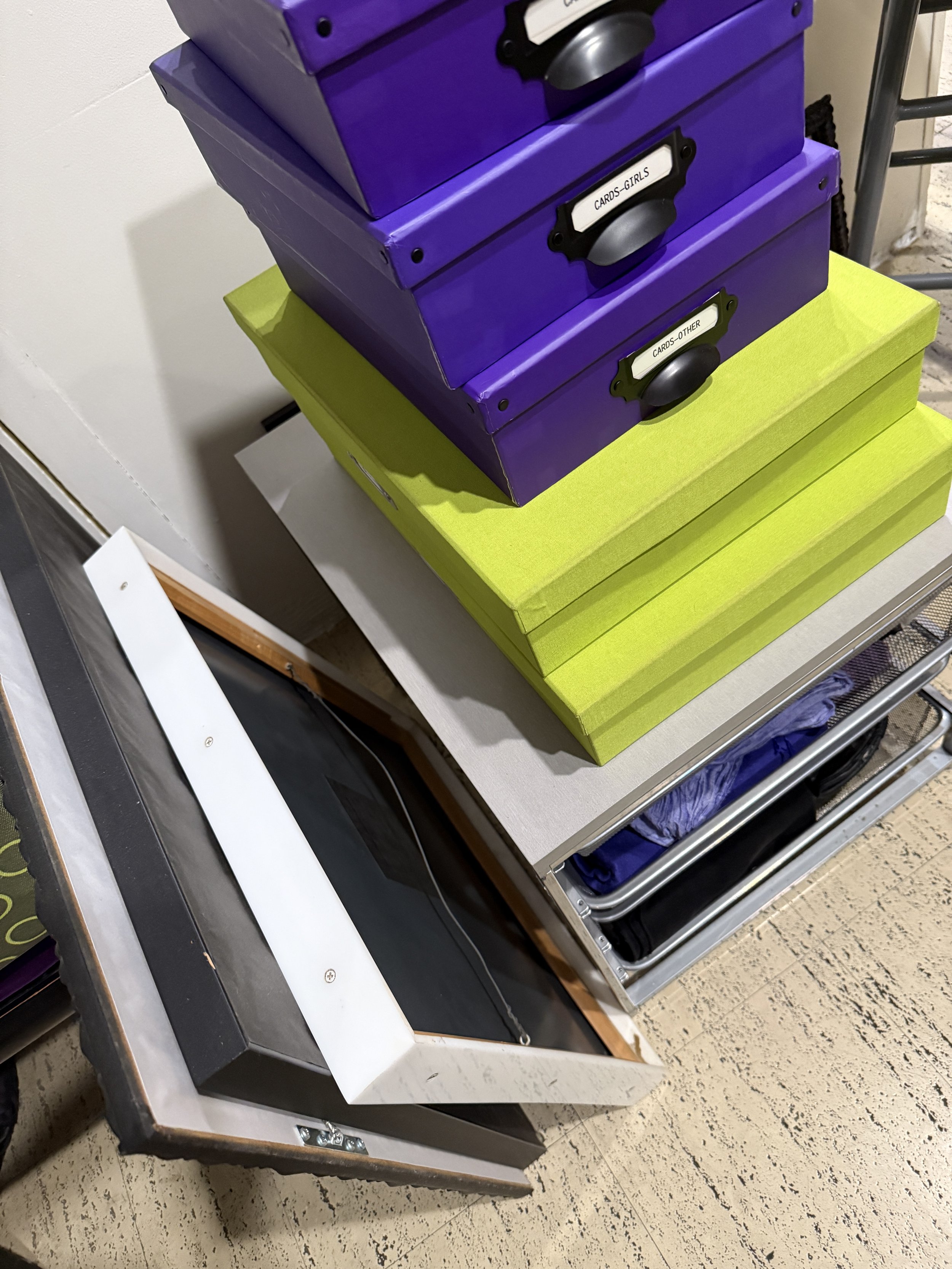
  • choosing furniture that encloses objects, such as a nightstand with a drawer instead of an open shelf

  • editing routinely

  • designating a home for objects

  • using coordinated bins on open shelves

  • carefully curating decorative objects, with an emphasis on having fewer

For a great fresh start, declutter until you find that sweet spot for the level of visual clutter your brain can handle.


4. Interesting Product – Fresh Start Planning

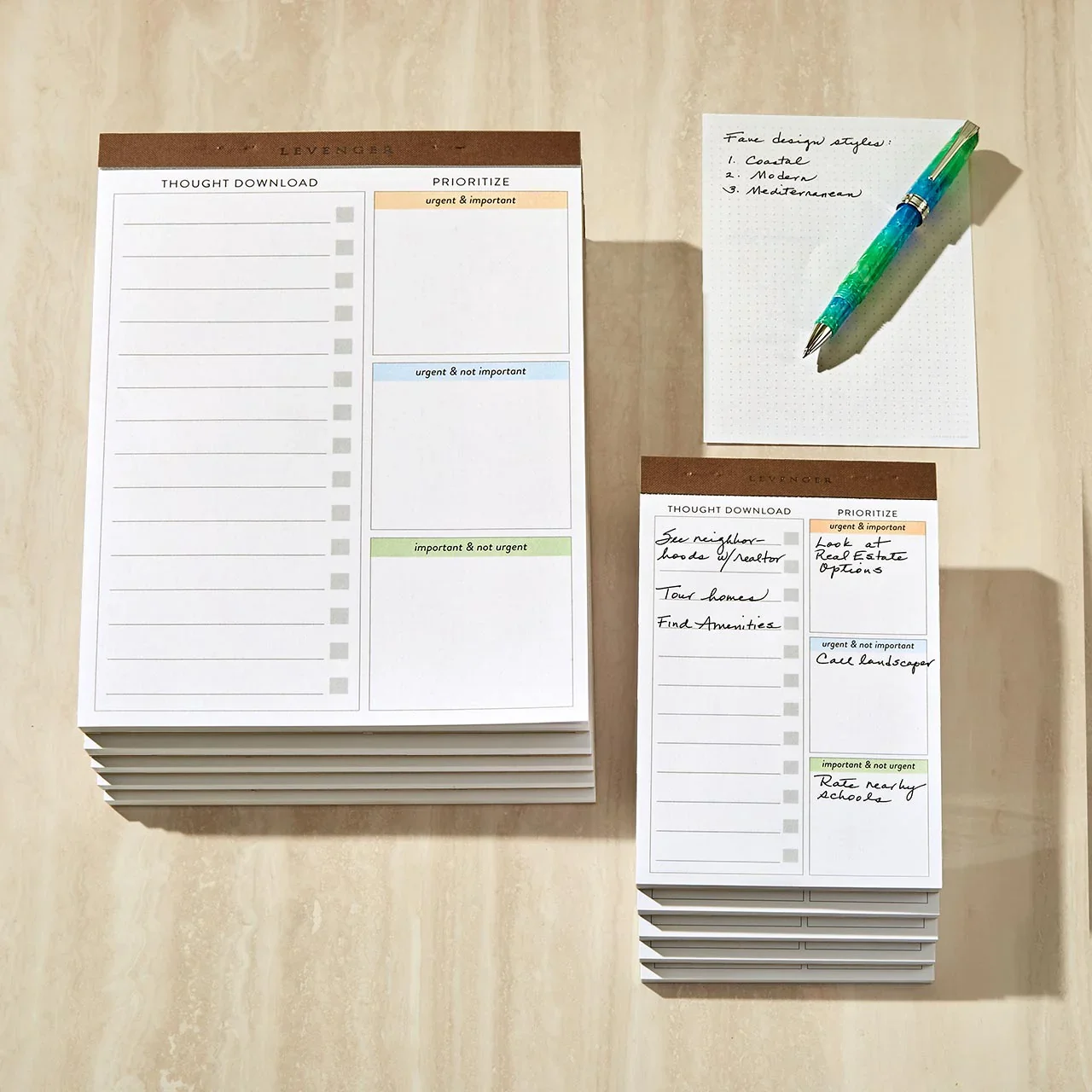
My go-to source for paper pads is Levenger. Their designs are streamlined, and the paper is smooth and easy to write on. If you’re looking for a new way to capture and prioritize your thoughts, check out Levenger’s Think and Plan Priority Manager Pad.

The pad comes in two sizes with two columns and four sections. The left column is great for brainstorming and list-making. It includes:

  • A ruled checklist

The right column is for prioritizing tasks using the Eisenhower method. It has three boxed sections for tasks:

  • Urgent and important

  • Urgent and not important

  • Important and not urgent

Download your brain, sort your to-dos, and give yourself an organized way to focus on your new beginning.


For a great fresh start, declutter until you find that sweet spot for the level of visual clutter your brain can handle.
— Linda Samuels, CPO-CD®, CVOP™


5. Interesting Thought – Fresh Start Magic

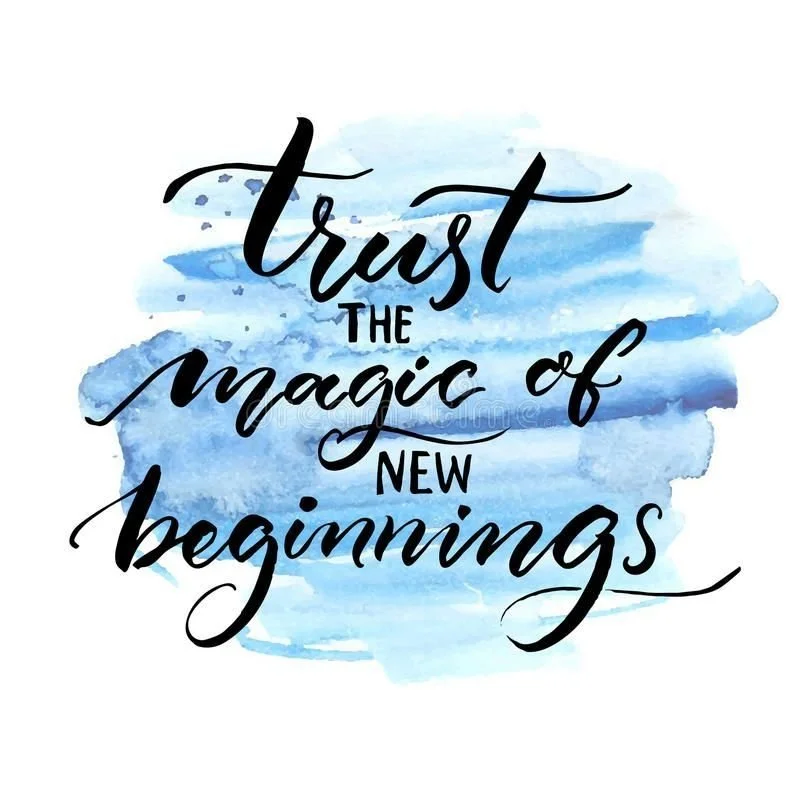
There’s something magical about fresh starts and new beginnings. You might feel hopeful, curious, excited, eager, joyful, empowered, or inspired. However, I’ve heard from many people recently that they’re having a very different experience. With the fresh start of the new year, they’re feeling anxious, apprehensive, pressured, disoriented, overwhelmed, or stuck.

Believe me, I get it. I’ve felt all of these ways at different points. On the one hand, I embrace and love a clean slate. It’s an opportunity for a reset and reimagining. Some years, like this past year, I just wasn’t ready to do ‘new.’ Instead, I was in the thick of finishing projects from the year, which overlapped with the time I typically review and plan.

Wherever you are right now, consider these possibilities:

  • If you’re ready, let the wonder of a new year help you move forward.

  • If you’re not ready, be gentle with yourself and ease the pressure to make big new plans for now.

Stay open to activating a fresh start (and its magical powers) at any time: a new day, month, or season.


The Fresh Start Advantage

There’s still time to make this first month of the new year work for you. Lean into the energy and newness of this season. Use the clean slate to your advantage.

Which of these discoveries resonates most with you? Which would you like to add? I’d love to hear your thoughts and invite you to join the conversation.


How Can I Help?

Do you feel overwhelmed, stuck, or disorganized? I’m here to help. Virtual organizing is an extraordinary path forward – Local feel with a global reach.

Let’s talk. I’m easy to reach.

Getting organized is possible, especially with a fresh start and compassionate support.


How a Professional Organizer Gets Organized: Creative Life Tips That Really Help

Based on my personal experience and over thirty years of helping clients get organized, I’ve learned a few things about what it means to be organized enough. That definition varies from person to person. What feels like being organized enough to me might be different for you. Guess what? That’s okay.

It's a journey to discover what helps you feel, be, and stay organized. I use the word ‘journey’ because getting organized isn’t a one-and-done event. As you go through life stages and changes, your organizing systems will likely need adjustments. Being organized helps make your life flow more smoothly. Being flexible and willing to tweak your systems as needed is part of the process.

Many strategies and products can work for your unique organizational needs. I’ve written hundreds of articles about this on the blog. However, today, I thought it would be fun to give you a behind-the-scenes look at some strategies and systems I use to stay organized with my things, thoughts, time, and space.


What Helps Me, a Professional Organizer, Stay Organized Enough?

Organized Things

Strategy: Create designated ‘homes’ for everything. This gives each possession a specific place to ‘live’ when it’s not in use and a spot to return after use.

Here are some ways I do that:

  • Hooks next to the desk for my purse and bags

  • Purse with compartments or mesh zipper bags inside larger totes

  • Pen cup on the desk that holds only working pens

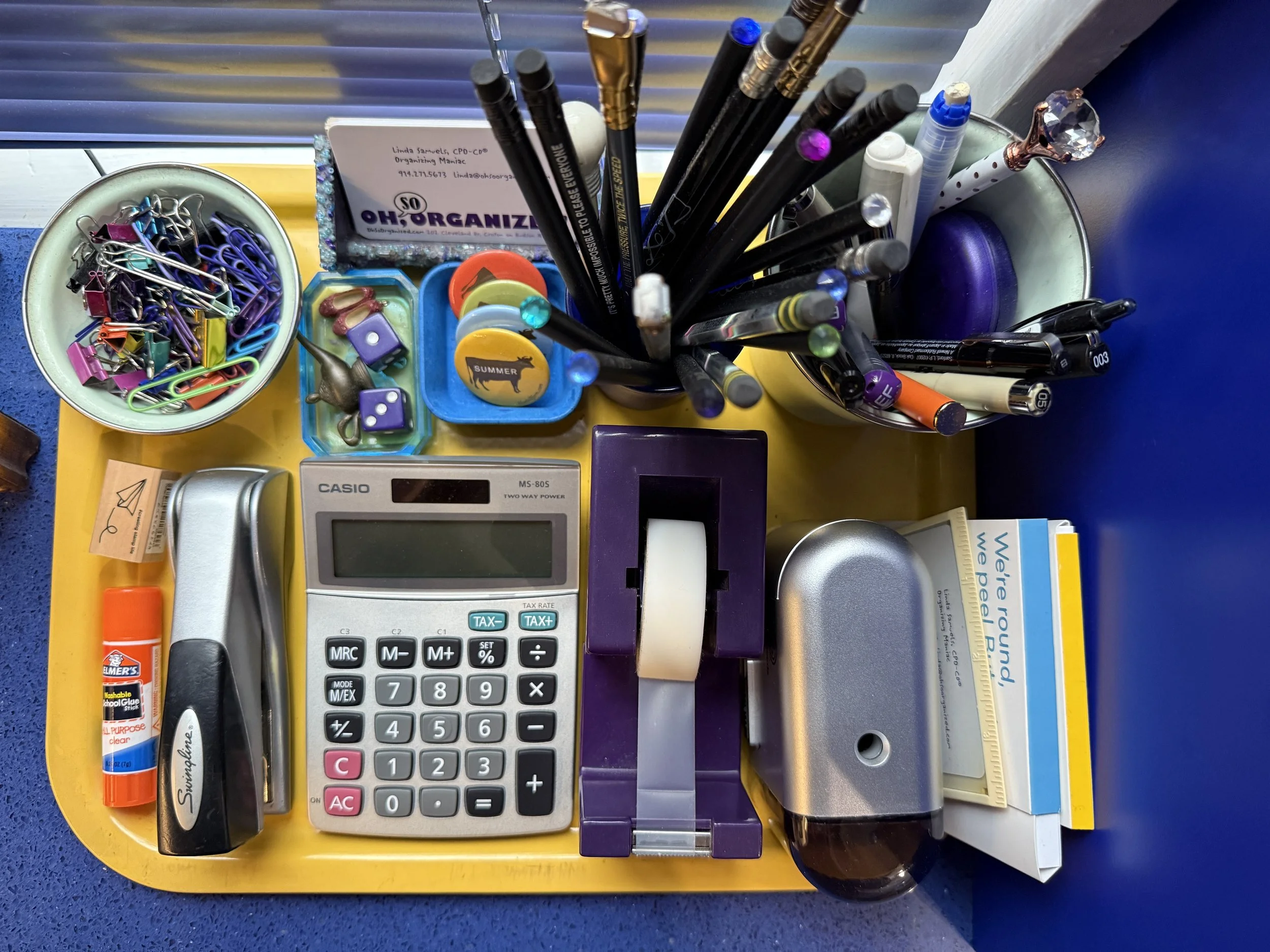
  • Tray on the desk that holds frequently used office supplies like a stapler, tape dispenser, calculator, and paper clips

  • Office supply cabinet with labeled drawers that organize similar items together

  • Charging station and stands for my iPhone and iPad

  • Drawer organizers, open bins, closed containers, and shelf dividers to house specific categories in the bathroom, kitchen, dining room, living room, and bedrooms

  • Hook inside the door of a lower kitchen cabinet next to the stove to hang potholders


Organized Thoughts

Strategy: Use specific methods and tools to help clarify, record, and process thoughts. Some thoughts are personal, while others relate to my professional life. As a verbal processor, I find that writing and talking are effective ways to organize my thoughts.

Here are ways I do that:

  • Write in my personal and meditation journals

  • Log tasks and projects in my 2Do app, which can be scheduled for specific dates

  • Place sticky notes and pens next to phones, beds, desk, kitchen and bathroom to jot quick notes, which get transferred or filed

  • Keep an AquaNotes® waterproof paper pad and pencil in the shower to capture ideas

  • Use a Word or Google Doc to organize ideas and projects

  • File ideas into my blogging binder by category that I want to potentially write about

  • Enlist help from a family member, friend, or professional to discuss and sort out my thoughts aloud.


It’s a journey to discover what helps you feel, be, and stay organized.
— Linda Samuels, CPO-CD®, CVOP™


Organized Time

Strategy: Build systems you can fully trust. Use effective strategies and products that encourage intentionality and help you gain better control of your time. When possible, use one calendar along with a separate task app to manage your personal and professional life.

Here are ways I do this:

  • 2Do app for scheduling appointments, tasks, birthday reminders, and lists such as ‘Books to Read’ or ‘Books Read’’

  • Notes app on iPhone with shopping lists for specific stores, mileage log, and health notes

  • Digital calendar with vertical weekly dated layout

  • Color-coded calendar to see at a glance where my time is scheduled, the mix of categories, and the white space signifying unscheduled time

  • Calendly app to schedule client and personal meetings

  • Analog clocks in my office and kitchen to better visualize time

  • Use timers to allow me to hyperfocus, remind me when to switch gears, get up and move, or wrap up what I’m doing

  • I use different timers depending on the need:

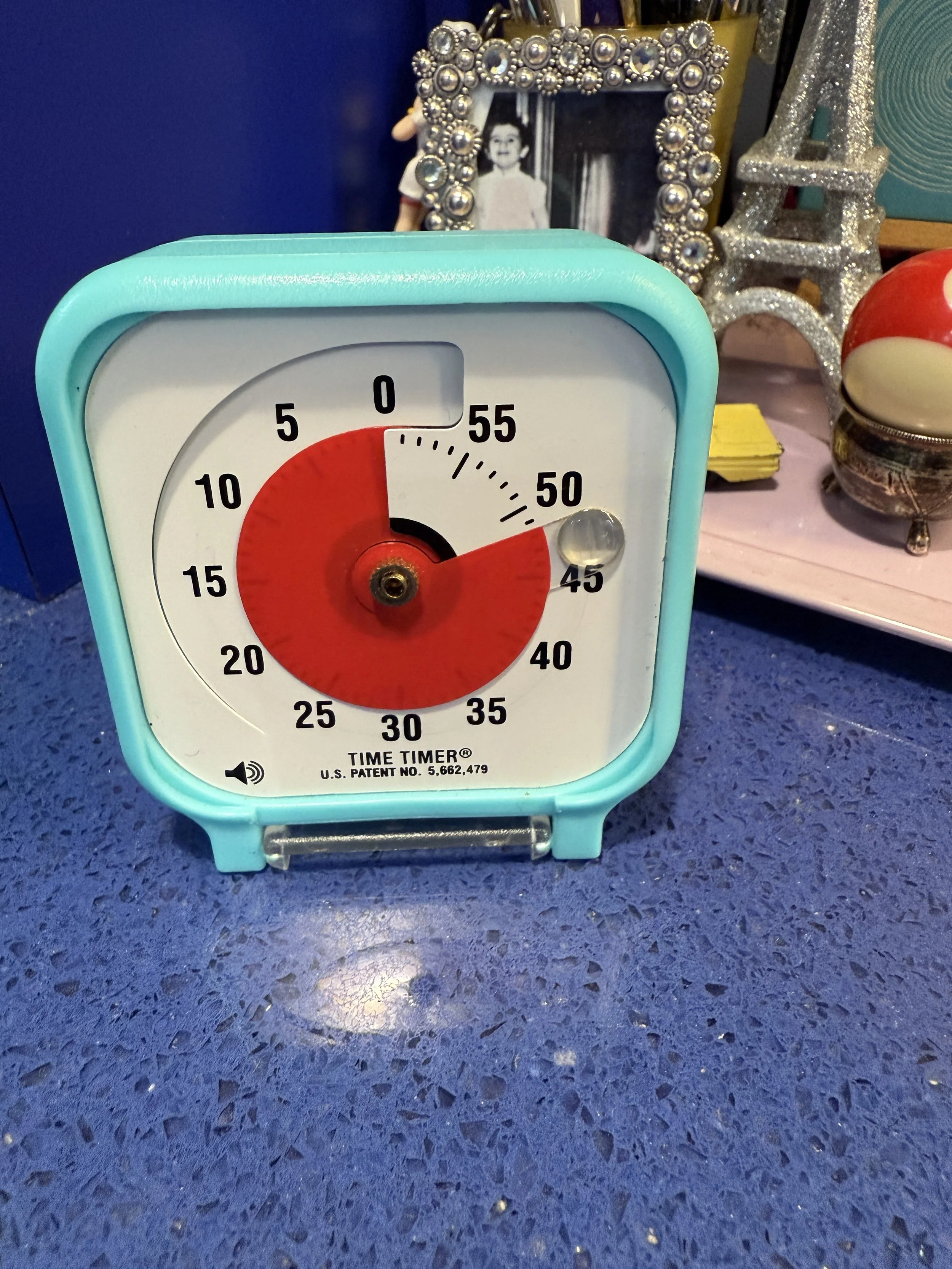
    • Time Timer® , a visual timer for meetings, virtual organizing sessions, and workshops

    • Clock app alarm with auditory alert on my iPhone for switching gears, cooking, and notifying of upcoming meetings

    • Kitchen timer on the stove with auditory alert for cooking or cleaning something with timed instructions

  • Only commit to something new after reviewing my current time commitments

  • Respect my time and know when to say “yes” or “no”

  • Have clear work and personal boundaries


Organized Space

Strategy: Define the purpose and designate zones for each room and area. Organize spaces to support their intended use, maximize the available area, and minimize clutter.

Here are some ways I do that:

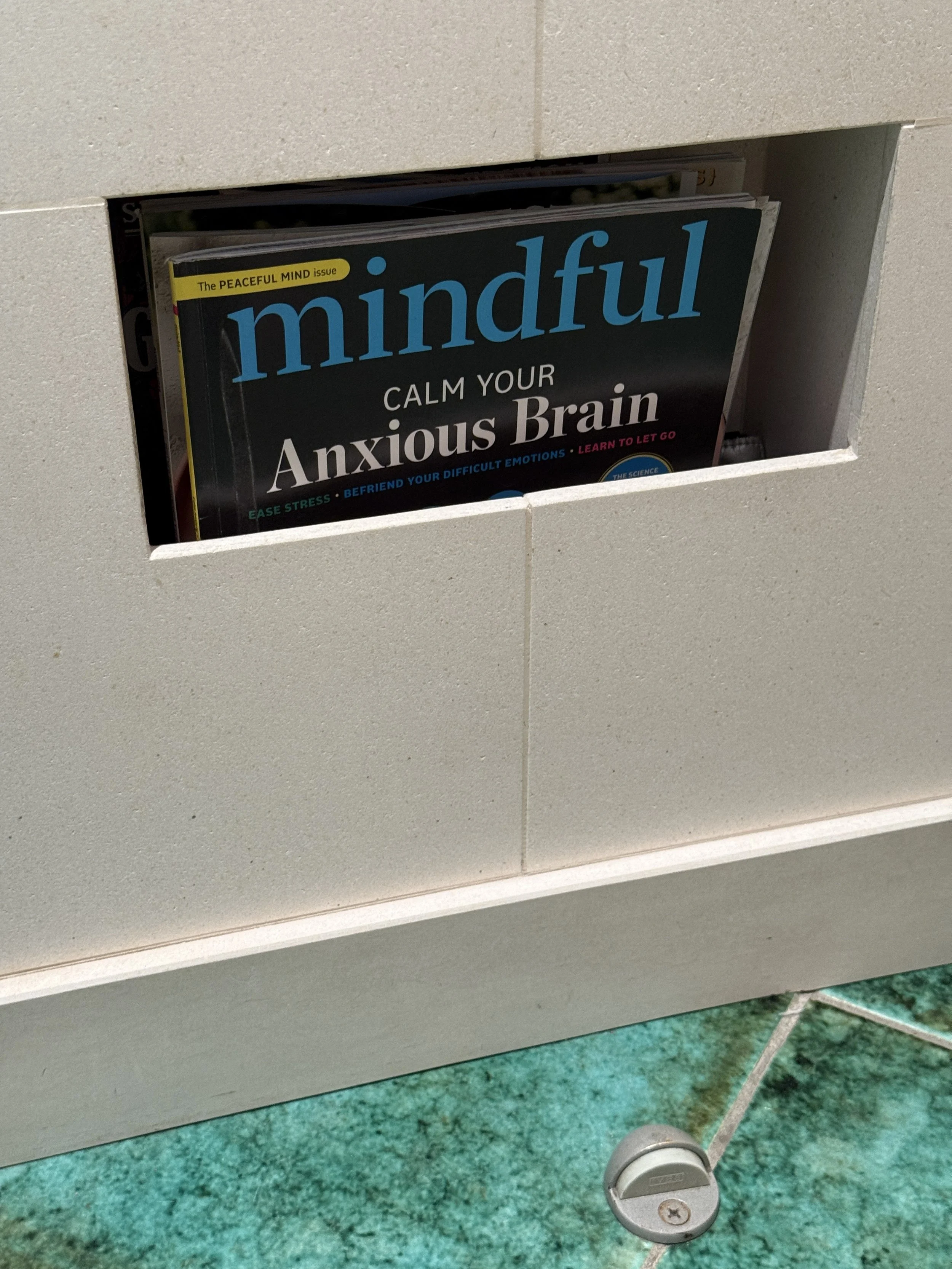
  • Guest bathroom with a in-wall magazine holder

  • Kitchen with a hot beverage station

  • Pantry with labeled Elfa drawers for storing gift wrapping supplies

  • Laundry room with closets for storing extra cleaning products and paper goods

  • Entryway with cushioned bench and open cubbies below to sit while taking shoes on and off and for storing most frequently worn shoes

  • Office with a wall slot to fold up and discreetly store my folding screen when not in use


What Helps You Organize Your Things, Thoughts, Time, and Space?

Getting organized enough can help create more ease in your life. If you’re feeling overwhelmed by everything, focus on one category at a time to improve. Which area needs the most attention? Which category do you want to work on first? What helps you feel organized enough for your things, thoughts, time, and space?

I’d love to hear your thoughts. I invite you to join the conversation.


How Can I Help?

Would you like support with getting organized? I’d love to help! Virtual organizing is an extraordinary path forward – Local feel with a global reach.

Let’s talk. I’m easy to reach.

Getting organized is possible, especially with support.

 
 
How Celebrating Clutter Can Make Surprising and Heart-Warming Outcomes

Have you ever considered celebrating clutter? Most people don’t think about it that way. We often view clutter as an overabundance of things, thoughts, or time that prevents us from living in the ways we value most.

The idea of celebrating clutter might almost seem like an oxymoron. More often, clutter feels like a burden, which can be overwhelming or paralyzing. It gets in the way and blocks forward movement.

Perhaps a better word choice is honoring instead of celebrating. What becomes possible when you approach clutter in this way? I will share a story with you to illustrate how this idea originated.


The Origin Story for Celebrating Clutter

Recently, I reread a post I wrote fifteen years ago, “As Sure as a Crocus.” Surprisingly, I found a comment (also from then) that I had never seen or responded to. I’m unsure how I missed it because I usually respond to all comments.

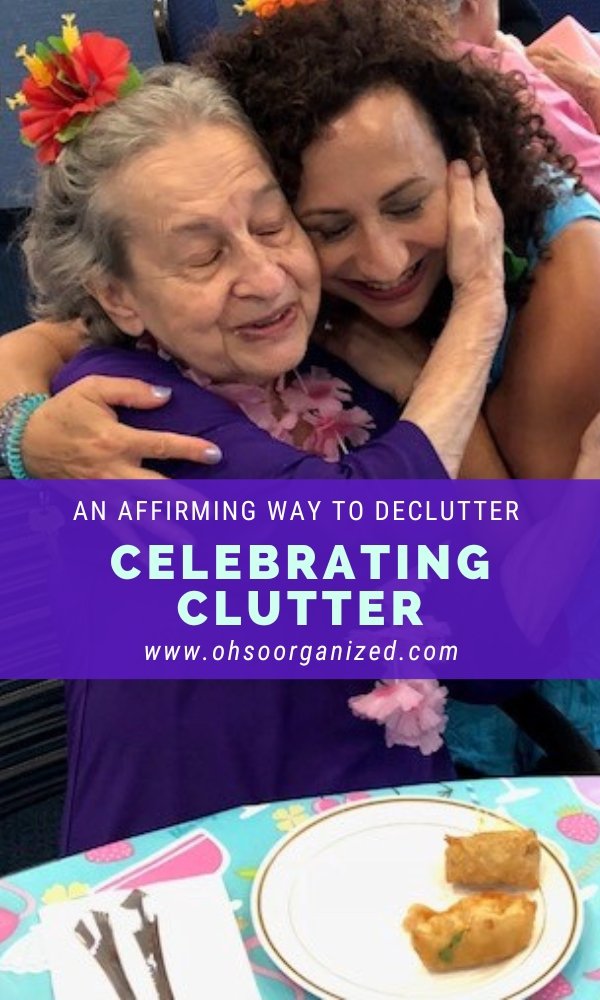
This message was especially poignant and heart-warming because it came from my mom, who has passed away. Seeing her signature made me smile, as she signed it with a secret name I knew was hers.

The timing of reading her words was significant for me. It was in March, the anniversary month of her birth and death. She’s been gone for four years, and I miss her terribly. As I read Mom’s sweet note of support, encouragement, and gratitude, I deeply and immediately felt her love and our connection, transcending the constructs of time and space.

How does this connect to celebrating clutter?


Why Celebrate Clutter?

Addressing the clutter in your life can be approached in many ways. One strategy is to identify and release those things that no longer belong, serve a purpose, or align with who you are now. From there, you can focus on organizing the “keepers.”

Another approach is to find the treasures and keepers first. After that step, edit those things you want to let go of.

With both strategies, you will undoubtedly make discoveries. You’ll find letters from loved ones now gone, notes with great ideas to pursue one day, children’s art, old photos, vacation memorabilia, or materials from previous careers.

These findings can evoke a range of emotions as they highlight and represent different stages and aspects of your life.

Celebrating clutter can enhance the decluttering process in several ways by gifting yourself time to:

  • Revisit and appreciate the items you’re releasing.

  • Enjoy and review some of the “treasures.”

  • Celebrate with a dance, high-fives, or cheers after a decluttering session.


Celebrating clutter can enhance the decluttering process.
— Linda Samuels, CPO-CD®, CVOP™

How Does Clutter Affect You?

Decluttering can be energizing or exhausting, depending on your mindset and situation. Approaching it with a celebratory perspective can transform your experience and make it more positive and affirming.

What is your relationship to clutter? What could celebrating clutter look like for you? I’d love to hear your thoughts. I invite you to join the conversation.


How Can I Help?

Do you want support organizing, editing, or decluttering? I’d love to help! Virtual organizing is an extraordinary path forward – Local feel with a global reach.

Please schedule a Discovery Call, email me at linda@ohsorganized.com, or call 914-271-5673. Living clutter-free is possible, especially with support.